
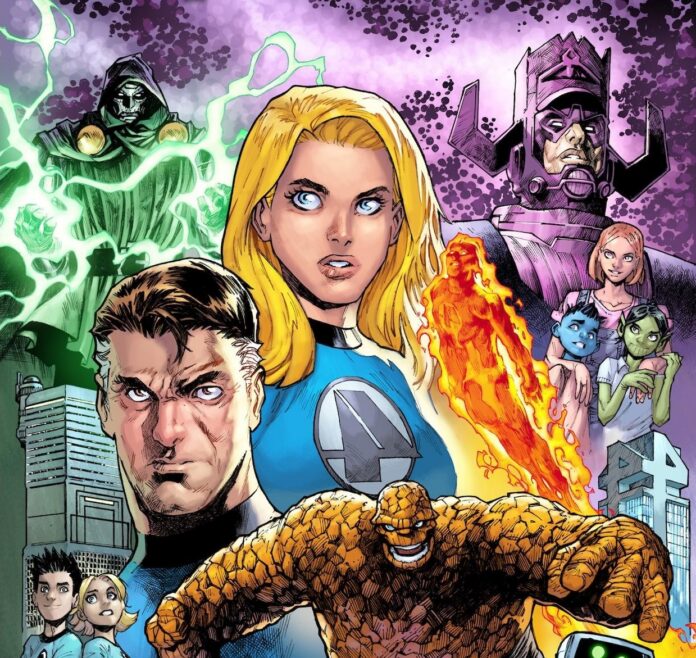
Marvel’s First Family just hit a milestone almost no comic reaches. This week, Marvel celebrated the 65th anniversary of the Fantastic Four with an oversized special, marking 65 years since the team debuted in 1961’s Fantastic Four #1, the Stan Lee and Jack Kirby book that effectively launched the Marvel Universe as we know it.
A story that runs in two directions
Fantastic Four #15 (legacy numbered #741), from the acclaimed current team of writer Ryan North and artist Humberto Ramos, arrived August 5 as an extra-large adventure. The premise leans into the occasion: the team’s personal arrows of time have been reversed, sending them careening into the past with no way home unless a mysterious stranger can help them, all while a deadly threat waits for them in the present. North has described it as a tale that runs across time in two directions at once, giving readers a chance to see the real effect the Fantastic Four have had on their world and on each other. And yes, the solicitation promises that Johnny Storm’s mustache somehow saves New York City.
Honoring the history
North, who also wrote the series’ 700th issue, called the Fantastic Four “a comic that matters like few others” in the medium. The anniversary issue reinforces that by weaving in classic imagery from legendary FF artists including Kirby, John Buscema, John Byrne, and Steve Epting, recontextualized in a new way. Marvel paired the release with a companion volume, Fantastic Four: 65 Years of the World’s Greatest Comic Covers, which collects more than 700 covers from across the team’s history.
Why it lands now
The timing is fitting. North and Ramos have been turning in one of the most celebrated Fantastic Four runs in years, leaning into the team as explorers and a family as much as a superhero unit. That is exactly what has always set the FF apart from the Avengers or the X-Men, and it is why, 65 years in, Marvel’s oldest team still feels essential. For longtime readers and newcomers alike, the anniversary issue is a reminder that the Fantastic Four helped build everything that came after.